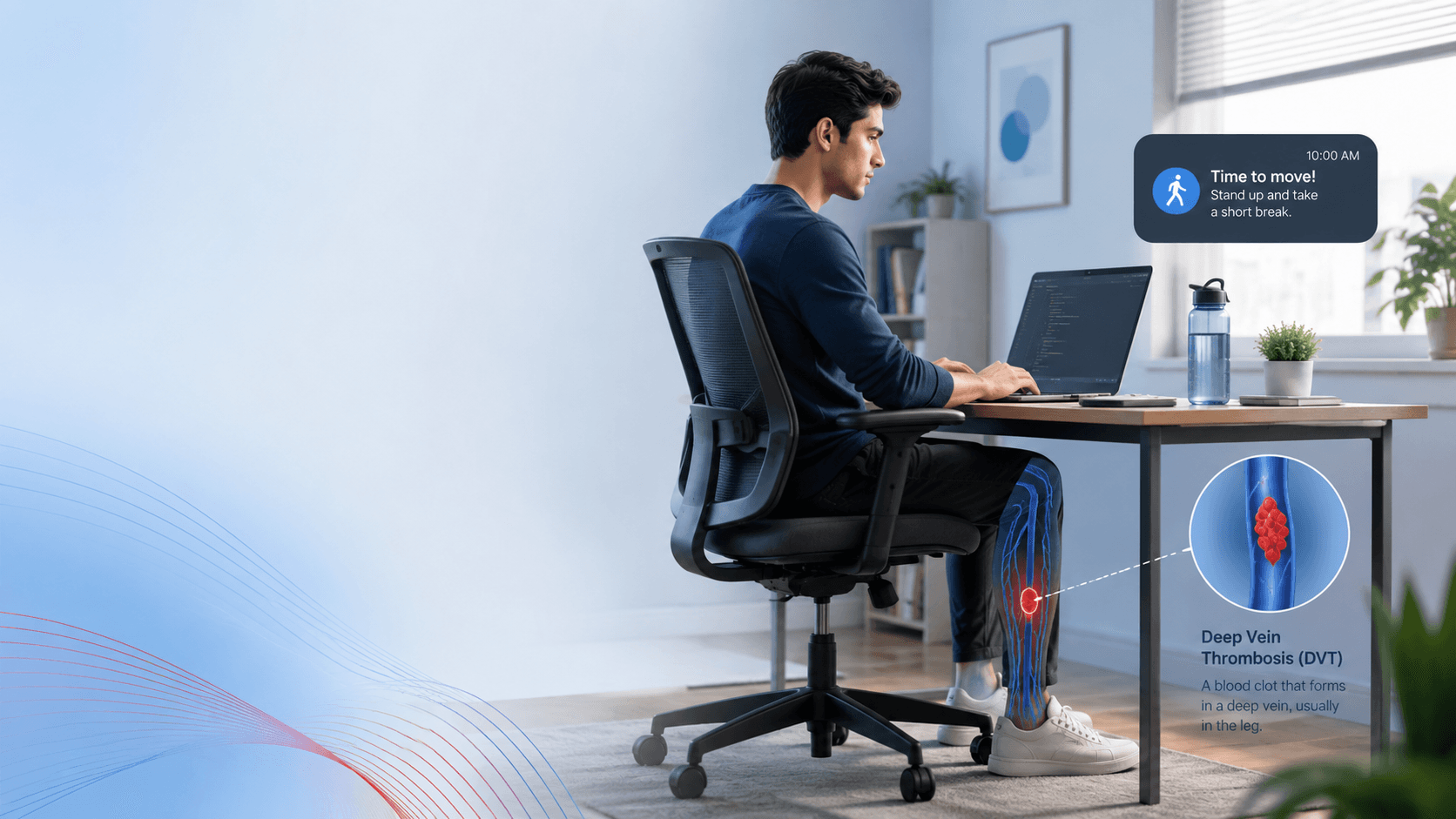
What Is Deep Vein Thrombosis?
Deep Vein Thrombosis is a condition where a blood clot forms in a deep vein, most commonly in the legs. When you sit still for a long time, the muscles in your legs do not contract as often. Since leg muscle movement helps blood flow back toward the heart, long periods of inactivity can cause blood to move more slowly and may contribute to clot formation in people who are at risk.
Why DVT Can Become Dangerous
The most serious concern with DVT is that part of a blood clot can break loose and travel to the lungs. This can cause a pulmonary embolism, also called PE. A pulmonary embolism can become a medical emergency and may be life-threatening. That is why DVT symptoms should never be ignored or treated casually.
Why IT and Work-From-Home Employees May Be at Higher Risk
Desk-based work often creates the perfect environment for long periods of inactivity. IT employees can easily remain seated for hours while solving technical problems, joining back-to-back meetings, or focusing deeply on complex tasks. This does not mean every desk worker will get DVT, but it does mean movement habits are very important.
1. Sitting for Long Periods
Coding, debugging, system monitoring, meetings, and troubleshooting can keep you in the same position for hours. When your legs are not moving, your calf muscles are not actively helping blood circulation. This can cause blood to flow more slowly in the legs, especially during very long sitting sessions.
2. Hyperfocus During Work
Many developers and IT professionals enter a deep-focus state when fixing a difficult bug, completing a deadline, or handling a critical configuration issue. Four or five hours can pass without noticing. During this time, you may forget to stand, stretch, drink water, or walk around.
3. The Work-From-Home Environment
In an office, you naturally move more. You may walk to a meeting room, talk to a colleague, go for lunch, or move around the workplace. At home, movement can become very limited. Some remote workers move only between the bed, desk, kitchen, and chair. This reduced daily movement can make prolonged sitting a bigger concern.
4. Not Drinking Enough Water
When working in an air-conditioned room or under a fan, you may not feel thirsty often. But low fluid intake can contribute to dehydration. Dehydration may make blood more concentrated, which can be one of several factors that increases clotting risk in vulnerable people. Keeping water nearby is a simple but important habit.
Common DVT Symptoms to Watch For
DVT symptoms often appear in one leg, but not everyone experiences the same signs. Possible warning signs include unusual swelling in one leg, pain or tenderness that may feel like a strong cramp, skin color changes such as redness or a bluish tone, and warmth in the painful area compared with surrounding skin. If you notice these symptoms, especially after long inactivity, seek medical advice promptly.
Emergency Warning Signs of Pulmonary Embolism
Get urgent medical help immediately if you experience sudden shortness of breath, chest pain, coughing blood, fainting, or a rapid heartbeat. These may be signs of a pulmonary embolism and should be treated as an emergency.
Simple Daily Habits to Reduce Risk
The good news is that small daily habits can help reduce long sitting time and support better circulation. You do not need to completely change your lifestyle in one day. Start with simple steps, build consistency, and slowly make movement part of your work routine.
Use the 45-Minute Rule
Set a reminder or alarm every 45 minutes. When it rings, stand up from your chair and walk for two to three minutes. You can walk around your room, refill your water bottle, stretch your legs, or take a short movement break before returning to work.
Do Simple Desk Exercises
Even while seated, you can move your legs. Try ankle circles, heel raises, toe raises, seated marching, and calf muscle squeezes. These small movements can help activate your leg muscles during long desk sessions.
Keep Water on Your Desk
Place a water bottle where you can see it. This makes hydration easier to remember. Try drinking water regularly throughout the day instead of waiting until you feel very thirsty.
Avoid Sitting Cross-Legged for Too Long
Sitting cross-legged for a long time may place pressure on your legs and can make your posture worse. Change your sitting position often and keep both feet supported when possible.
Consider Standing While Working
If your budget allows, a height-adjustable standing desk can be a valuable investment. Alternating between sitting and standing during the day can reduce continuous sitting time. You do not need to stand all day; the goal is to change positions regularly.
Use Smart Reminders
Many smartwatches and fitness trackers include idle-time reminders. These alerts can remind you to stand, walk, stretch, or move your legs. Calendar reminders, phone alarms, and productivity apps can also help you build the habit.
Do You Need a Full Workout Routine?
Going to the gym or following a structured workout plan is excellent if you can do it consistently. However, many busy IT professionals find it difficult to maintain a full workout routine. That is why small movement habits during the workday are still valuable. A few minutes of movement repeated throughout the day is better than doing nothing.